Mission & Strategic Plan
- 11,000+ Students Enrolled Annually
- 31% Students of Color
- 1965 College Began Serving Students
Mission
Vision
Strategic Plan
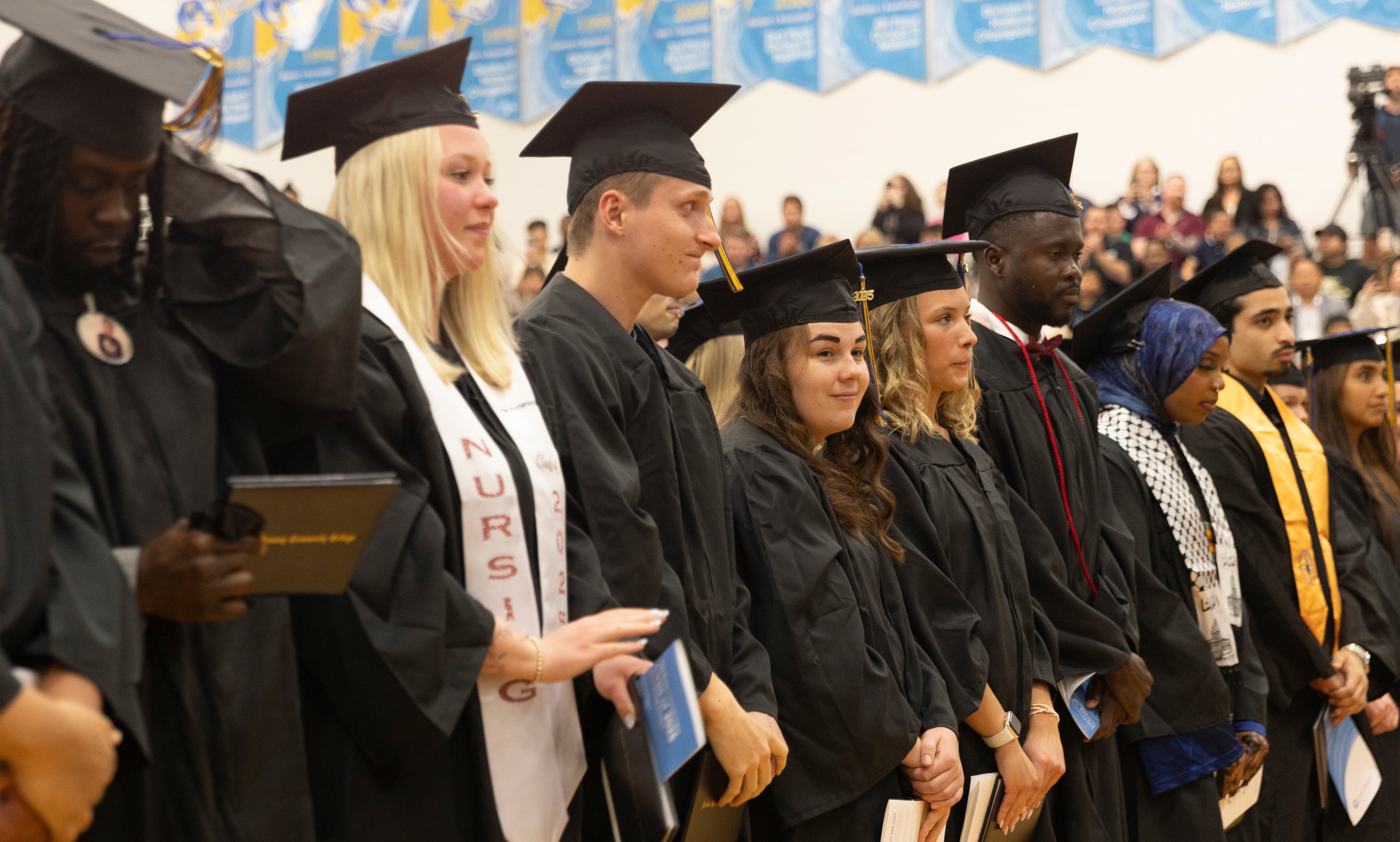
Strategic Theme: Completion
Completion Goals, Objectives, Measures
The Minnesota State System defines completion rate as graduation or transfer by the end of the third spring after entry for students in a fall cohort (Undergraduate Regular and Undergraduate Transfer).
Objective: Increase completion rate from 53.2% to 60% by 2030, with all disaggregated demographic groups above 55%
Although not all students enter Anoka-Ramsey with the goal of earning a credential, earning a credential can build self-efficacy, pave the way to transfer success, lead to career opportunities and higher wages, and inspire lifelong learning.
Objective: Increase Anoka-Ramsey academic awards (degrees, diplomas, certificates) earned by 25% from 1093 to 1366 by 2030, with all disaggregated demographic groups experiencing an increase of at least 20%
Because many Anoka-Ramsey students have a goal of completing a credential at another institution, our students’ success at their next institution is an important metric to track.
Objective: Increase the percentage of students who transfer with credits from Anoka-Ramsey and earn a bachelor’s degree within six years from 49% to 52% by 2030, with all disaggregated demographic groups above 47%
Metrics we can act on that predict, or lay the groundwork for, accomplishing goals and objectives:
- Increase Annual Unduplicated Enrollment (Headcount) from 11,420 to 12,500 by 2030
- Achieve Course Success Rates (C or better) of 83% for all courses regardless of modality, location, or students enrolled
- Increase the percentage of full-time students who earn at least 24 credits and the percentage of part-time students who earn at least 12 credits in their first year from 40% to 45% by 2030
- Increase the percentage of students who achieve a Credit Completion Rate during fall semester of at least 66.67% from 88% to 93% by 2030
- Increase Second Fall Persistence (% persisting or completing) from 67.8% to 75% by 2030, with no disaggregated demographic group below 70%
Strategic Theme: Climate
Climate Goals, Objectives, Measures
The college uses two surveys to measure the employee experience: the PACE Climate Survey administered in odd Springs and the Higher Education Data Sharing Consortium (HEDS) Campus Climate Survey administered in even Springs.
Objective: Improve PACE Overall Mean from 3.777 to 3.94
Objective: Improve PACE Supervisory Relationships Mean from 3.793 to 3.942
Objective: Improve HEDS Employee Sense of Welcome (agree or strongly agree) from 84% to 90%
Objective: HEDS Employee Sense of Belonging (agree or strongly agree) from 74% to 80%
The data generated by the PACE survey is designed to help institutions improve institutional climate so that employees can build an environment that supports student success. As the employee experience improves, the student experience should also improve. The college uses two surveys to measure the student experience: the Noel Levitz Student Satisfaction Inventory (SSI) administered in even Falls and the Higher Education Data Sharing Consortium (HEDS) Campus Climate Survey administered in even Springs.
Objective: Improve Noel Levitz SSI Overall Satisfaction from 64% to 70%
Objective: Increase the percentage of students who would choose ARCC again from 75% to 85%
Objective: Improve HEDS Student Sense of Welcome (agree or strongly agree) from 87% to 93%
Objective: Improve HEDS Student Sense of Belonging (agree or strongly agree) from 75% to 82%
Metrics we can act on that predict, or lay the groundwork for, accomplishing goals and objectives
Employee Engagement Survey Response Rates
- Increase PACE response rate from 48% to 65%
- Increase HEDS response rate from 37% to 50% for employees
- Increase the percentage of respondents who include a qualitative comment on the PACE survey from 55% to 65%
Employee EngagementCollege Activity
- Increase the number of employees participating in college events (establish baseline participation numbers for 2025-2026)
Employee Retention – Consistently retain 90% of full-time faculty and full-time staff with all disaggregated demographic groups retaining above 85%
Employee Satisfaction – Reduce Grievances and Allegations from 9 per year to 5 per year
Strategic Theme: Capacity
Capacity Goals, Objectives, Measures
Maintain the college’s financial capacity
Objective: Maintain a CFI above 4.4
Align the college’s human capacity with operational needs
Objective: Conduct a needs analysis in 2026 to set a baseline for operational needs that leads to at least 90% position-to-need alignment across academic affairs, student affairs, and administrative support functions
Enhance the efficiency, effectiveness, adaptability, and resilience of the college’s systems, processes, and infrastructure
Objective: Develop and implement standard process documentation for 100% of core administrative and student-facing functions and ensure at least 85% of staff are trained in their use
Strengthen the college’s capacity to collect, analyze, and apply data, evidence, and information to guide planning, resource allocation, and continuous improvement
Objective: At least 80% of budget requests, program reviews, and other planning activities will include documented use of data in the planning process
Metrics we can act on that predict, or lay the groundwork for, accomplishing goals and objectives
- Increase total dollars raised via Private Giving from $431,000 to $1 million by 2030
- Increase Enrollment FYE by 15% from 4889.9 to 5623.4 by 2030
- Increase Course Fill Rates from 74% to 80% by 2030
- Increase Space Utilization from 35.4% to 45% by 2030
- The variance between budgeted and actual spending will be within ±5% annually
- 100% of annual performance reviews will be completed each year
- 85% of the processes of functional areas that are aligned with Anoka Tech will be standardized between the two colleges
- Increase Power BI usage from 87 unique users to 150 unique users annually by 2030
Previous Strategic Plan
Embedded within these goals is a commitment to quality education and student success, ultimately leading to graduation. Graduating with a degree and/or certificate benefits both career and transfer students. By graduating with a credential, students demonstrate their persistence and skills and are better prepared for the challenges of life and future studies.
We value the success and well-being of our students.
We value access and affordability for our students.
- Increase the number of students transferring or completing a certificate, diploma, or degree in a timely manner.
- Equitably increase retention and academic progress.
- Develop proactive approaches to meet students’ changing academic, physical, emotional, and financial needs.
- Empower students to gain ownership of their academic and personal success.
We value excellence in teaching and learning. We value continuous improvement in curriculum
and instruction.
We value exploring new pedagogical methods that enhance learner outcomes.
- Offer rigorous programs of study to meet current and future transfer and workforce expectations.
- Actively assess that learner outcomes are being met to improve curriculum and instruction.
- Incorporate inclusive classroom strategies that engage all students.
- Establish and maintain learning environments and delivery methods that support diverse, state-of-the-art, student-centric learning experiences.
- Maintain high academic standards and support students to produce quality work.
We value a culture of caring and mutual respect for all students and all employees.
We value equity and inclusion campus-wide for all constituents.
We value collaborative leadership and decision making.
We value intellectual curiosity and knowledge growth.
- Support a welcoming and safe environment for our students and employees.\
- Recruit, hire, and retain diverse faculty and staff that reflect our community and students.
- Invest in development opportunities for faculty and staff.
- Promote the value of free speech and diverse voices and viewpoints.
We value strong community partnerships that benefit the success and well-being of
our students.
We value the stewardship of physical, financial, and human resources.
We value long-term financial sustainability that incorporates strategic investments.
- Build a reputation for excellence within the region and state; and be nationally recognized as leaders in community and technical college education.
- Develop systems and curricula that respond expediently to new job skills, training, and career opportunities with community and industry partners.
- Enhance relationships with K-12 schools, workforce organizations, and higher education transfer partners to provide educational and career pathways for students.
- Promote practices that enhance environmental stewardship, reduce our carbon footprint, and make us a good neighbor in our community.
Anoka-Ramsey Community College continually reviews and assesses its curriculum. Throughout this process, the College is committed to developing students’ commitment to lifelong learning through clear thinking, effective communication, accepting diversity, and ethical decision making. As a result, the College will provide learning experiences that promote learning in the following areas:
- Clear Thinking: thinking through reasoning, creating, and reflecting
- Effective Communication: integrating information with experience and expressing insights
- Accepting Diversity: understanding and respecting individuals and local, regional, national, and global communities
- Ethical Decision Making: maintaining responsibility for environmental, political, economic, social, and personal concerns
College News