
Wellness Program
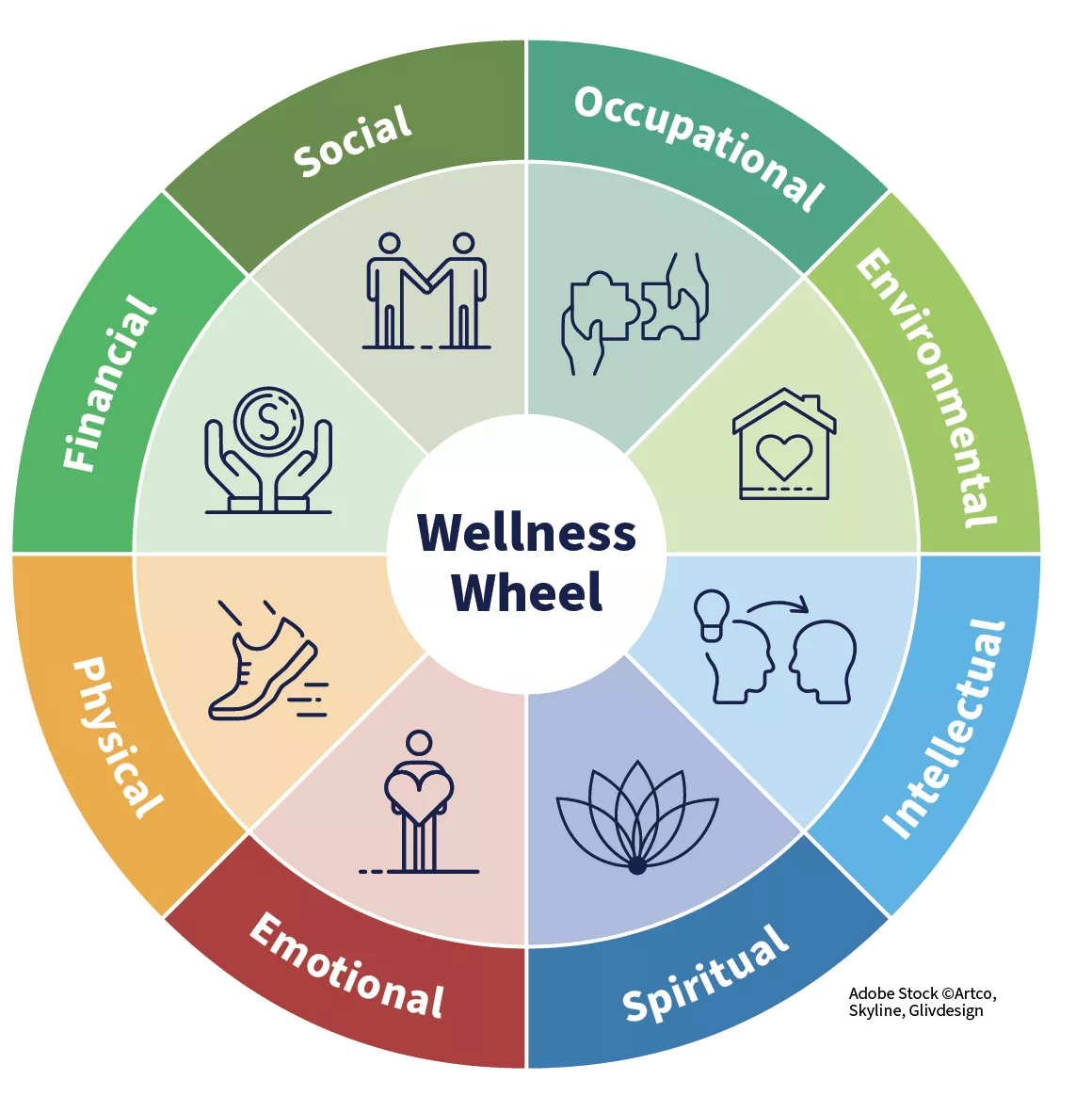
Wellness Wheel
The Wellness Program embraces a holistic approach to wellness through eight interconnected dimensions of well-being: emotional, environmental, financial, intellectual, occupational, physical, social, spiritual. Together, these dimensions help support a balanced lifestyle and encourage personal growth, resilience and overall well-being.
Review an overview of each dimension below. Then, dig deeper into resources and information.
Emotional health includes effectively managing stress, staying on top of schoolwork and other responsibilities, getting adequate sleep, asking for help and talking with a counselor when needed.
Environmental wellness involves awareness of one’s surroundings including the physical environment, one’s community and personal space.
Financial wellness relates to living within your financial means and planning for your financial future.
Intellectual wellbeing includes staying curious and engaged in learning new things. Be creative, read for fun, stay current about social and political issues and join clubs that focus on enhancing intellectual interests.
Occupational wellness means seeking out a livelihood and hobbies that align with one's interests, values and goals.
Physical wellness involves taking care of all aspects of physical health: exercise and movement, eating well-balanced meals, staying hydrated, getting adequate and quality sleep, managing stress and getting preventative medical care.
Social wellness includes establishing and maintaining a strong social network of healthy relationships that provide guidance and support.
Spiritual wellness is a process of understanding beliefs, values and ethics that help guide your life.
Monthly Wellness Tip
Financial wellness means living within your means, knowing your income sources, resources, and responsibilities. You can create a monthly budget by making a list of all expenses: housing, food, transportation, utilities, debt payments, child care, entertainment, etc.
Be honest about your actual expenses. Review and add up all your monthly income sources. If your income is higher than your expenses, you are living within your means. However, if your monthly expenses are higher than what you earn, you may need to either increase your income or reduce your expenses.
You can trim your expenses by considering which may be unnecessary. Can you skip the coffee from the corner shop? Can you stay in to watch a movie instead of going to the theater? Are your subscriptions to DoorDash, Spotify, or Netflix necessary? Is the store brand version of foods just as good as the more expensive brand name version? Writing down what you spend each month can help you keep track and balance your income and expenses so you won’t be surprised at the end of the month.
Wellness Events for Employees
Mindful Mondays
Every other Monday, 12:15 to 12:30 pm
from Minnesota Management & Budget's State Employee Group Insurance Program (SEGIP)
and WebMD
Recharge your day with Mindful Mondays. Every other Monday from 12:15 to 12:30 pm, enjoy a guided 15-minute break focused on reducing stress, improving focus and supporting well-being. Sessions rotate among meditation, mindfulness practices, gentle stretching, breathing techniques and grounding exercises. All experience levels are welcome.
Well-Being Webinars
Wednesdays, noon to 1 pm
from Minnesota Management & Budget's SEGIP
Sample upcoming topics include employee benefits, fitness for all and living with intentional gratitude.
More Wellness Events
